San Diego Bamboo Nursery
 DID YOU KNOW..
Bamboo is a grass and will not take over your yard.
With over 1,000 species, bamboos include the tallest
and fastest growing grasses in the world.
There are two distinct types of Bamboo, "clumping"
and "running".
In the CLUMPING bamboo the underground stems (rhizomes) grow in a tight clump and do not spread.
In the RUNNING bamboo the underground stems (rhizomes) can travel several feet underground before sending up new vertical shoots.
Due to the large variety of colors and sizes, bamboo plays an important role in a beautiful landscape design.
Below is some of our bamboo. Call for current inventory / price.
BAMBUSA OLDHAMII
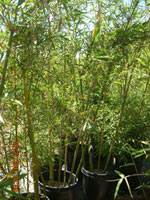 Common name: Giant Timber Bamboo
Description: clumping bamboo grows up 40' tall with a 4" diameter native to Taiwan
Conditions: full sun hardy to 12 degrees F. medium water needs
BAMBUSA MULTIPLEX ' ALPHONSE KARR
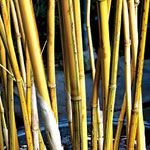 Common name: Alphonse Karr
Description: max. height 30' width 8-10' clupming bamboo similar to the species, but the clums and branches are bright yellow with irregular longitudinal narrrow dark green stripes
Conditions: full sun hardy down to 12 degrees F. with medium water needs
BAMBUSA TULDOIDES "VENTRICOSA"
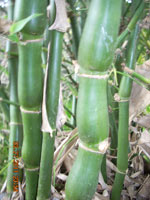 Common name: Buddha's belly
Description: max.height 40-55' with 2" clums of green bamboo with swollen internodes when grown in pots under dry conditions. In the ground it reverts to a giant with zizag clums and brances. Clumping bamboo.
Conditions: full sun, hardy to 21 degrees F. with medium water needs
BAMBUSA TULDOIDES "VENTRICOSA KIMMEI"
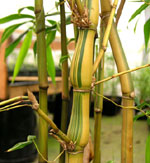 Common name: Striped Buddha's belly
Description: max. height 40-55' with" clums, yellow striped with green. Clumping bamboo.
Conditions: full sun, hardy to 21 degrees F. with medium water needs
BAMBUSA VULGARIS "VITTATA"
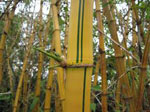 Common name: painted bamboo
Description: max. height 30-50' with 4" wide golden clums with green stripe, that arch over toward the tips. Clumping bamboo.
Conditions: full sun, hardy to 27 degrees F. with medium water needs
PHYLLOSTACHYS NIGRA
.jpg) Common name: Black
Common name: Black
Description: max. height 20-35' with 2" diameter green clums that turn black after 1 year. Running bamboo.
Conditions: full sun hardy to 0 degrees F. with medium water needs