Our Palm Trees
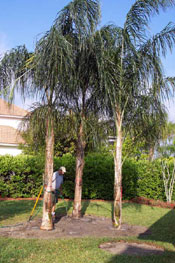 With over 4200 species of Palms, growing in rain forests, harsh deserts and cool mountain regions, the choices are diverse and varied.
Due to the "adventitious" root system , the root-ball of a Palm occupies a small area, making them ideal for landscaping in close proximity to structures, walkways and pools. They can even thrive in a decorative planter for many years.
Palms respond best to well-draining soils and should be fertilized 3-4 times annually.
Palms of the order "Principes", are the Princes of the plant kingdom.
Below are some of our palms. Call for current inventory / price.
Queen Palm
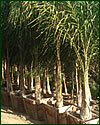 Scientific Name: Syagrus romanzoffiana
Common Name: Queen palm
Typical height: 40’
Growth Rate: Fast
Hardiness Zone:10A-11
Characteristics: Straight trunk to 40’ tall with arching bright green, glossy leaves that range 10-15’ long. Grows rapidly with water and fertilizer.
King Palm
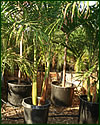 Scientific Name: Archontophoenix cunninghamnia
Common Name: King palm
Typical height: 30’
Growth Rate: Moderate
Hardiness Zone:10A-11
Characteristics: They tolerate shade and require moderate water. Have 10-15’ spread with smooth green trunks creating an elegant look. This is a very popular palm for contractors and homeowners.
Pygmy Date Palm
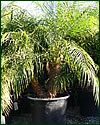 Scientific Name: Phoenix roebellini
Common Name: Pygmy date palm
Typical height: 6-10’
Growth rate: Slow
Hardiness Zone: 10A-11
Characteristics: Usually multi-trunk (nursery), fine leaves, requires moisture, will tolerate full sun, however it thrives in part shade. These palms grow slowly, but are always worth the wait.
Canary Island Date Palm
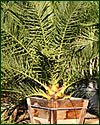 Scientific Name: Phoenix Canariensis
Common Name: Canary Island date palm
Typical height: 40’
Growth Rate: Slow
Hardiness Zone: 8B-11
Characteristics: Big, thick trunk pineapple like shaped palm with dull deep green foliage. It requires ample room for potential future growth. Drought tolerant, and temperature hardy.
Chinese Windmill Palm
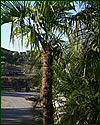 Scientific Name: Trachycarpus Fortunei
Common Name: Chinese Windmill palm
Typical height: 25’
Growth Rate: Slow
Hardiness Zone: 8-10b
Characteristics: One of the hardiest palms available being able to withstand very cold temperatures. It has a slender trunk covered with dense hairy fiber. These palms also grow very well in beach ares, such as many parts of San Diego.
Mediterranean Fan Palm
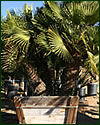 Scientific Name: Chamaerops humilis
Common Name: Mediterranean fan palm
Typical height: 10’
Growth rate: Slow
Hardiness Zone: 8-11
Characteristics: They achieve optimal growth in full sun. Leaves green to bluish green. Usually develop several trunks slowly from offshoots creating a unique look especially when larger in size.
Mexican Fan Palm
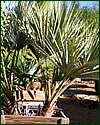 Scientific Name: Washingtonia Robusta
Common Name: Mexican fan palm
Typical height: 90’
Growth Rate: Fast
Hardiness Zone: 8-11
Characteristics: Very fast growing, with bright green fan shaped leaves 4-6’ wide. It will tolerate poor soil but grows faster in good conditions. This palm is known for its use up and down the streets in Los Angeles and Hollywood.
Mexican Blue / Blue Hesper Palm
Scientific Name: Brahea armata
Common Name: Mexican blue/Blue hesper palm
Typical height: 30’-40’
Growth Rate: Slow
Hardiness Zone: 9b-11
Characteristics: This palm has dramatic icy blue foliage. It takes drought , heat and down to18 degrees. Despite its slow growth, the color of the foliage adds variety to the landscape.
Pindo Palm / Jelly Palm
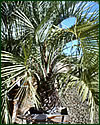 Scientific Name: Butia Capitata
Common Name: Pindo/Jelly palm
Typical height: 12-15’
Growth Rate: Slow
Hardiness Zone: 8-10b
Characteristics: Thick heavy trunk with blue-green arching foliage, requires average water and high to moderate sunlight, perfect for Riverside County. We have many Pindo Palms in stock, call for details.
Bismark Palm
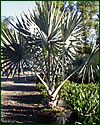 Scientific Name: Bismarkia nobilis
Common Name: Bismark palm
Typical Height: 30-60’
Growth Rate: Slow-moderate
Hardiness Zone: 10a-11
Characteristics: This unique bold and large palm has stunning, stiff, blue-white foliage that dominates the area that it inhabits. It enjoys full sun and moderate water.